
Level Sensors & Transmitters
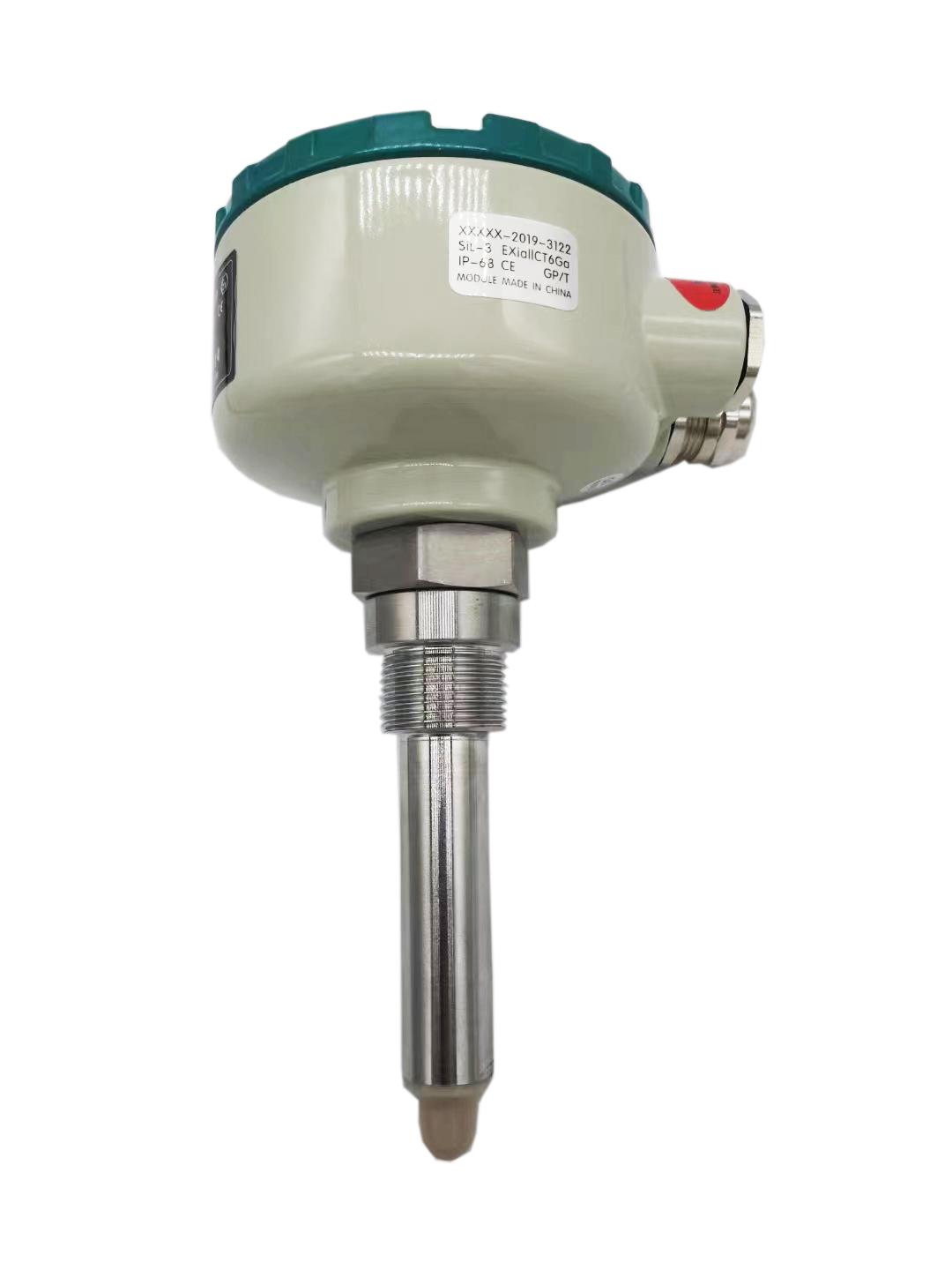
HSM-VB106 / VB107 Microwave Level Switch
Non-contact through-wall
HSM-VB106 / VB107 technical data
Measurement
- Minimum dielectric constant
- ≥ 1.5
- Media
- Solids and liquids
- Foam sensitivity
- None
- Adjustment
- Field-settable alarm point, live value shown
Electrical
- Supply voltage
- 12–30 V DC
- Current consumption
- 40 mA
- Output
- PNP or NPN
- Maximum external load
- 20 mA
- Ambient temperature
- −40 to +85 °C
Mechanical
- Wetted materials
- PEEK and stainless steel
- Medium temperature
- 115 °C standard; 150 °C with heat sink
Values are for the standard configuration. Ranges, threads, probe lengths and output types outside this table are available on request — the datasheet revision for a custom build is issued with the quotation.
Request the PDF datasheet →Level Sensors & Transmitters
HSM-VB106 / VB107Microwave Level Switch
Non-contact through-wall
Microwave resonance switch that detects level through the vessel wall, so nothing protrudes into the process. Works on solids and liquids with dielectric constant above 1.5, ignores foam, and tolerates sticky conductive build-up. PEEK and stainless wetted parts, 115 °C standard or 150 °C with heat sink.
Engineering reply · Evaluation samples available · Custom ranges built to order
- Unaffected by foam
- Tolerates sticky and conductive build-up
- Works on solids and liquids with εr ≥ 1.5
- PEEK and stainless wetted parts for hygienic service
- Set-point and live value visible on site
- 115 °C standard, 150 °C with heat sink
How it works
The VB106/107 forms a high-frequency resonant circuit between its probe, its metal housing and the internal electronics. When medium covers the probe — or when the local dielectric constant changes — the resonant frequency shifts, and the unit compares the new frequency against your alarm setting. The consequence is a switch that does not care about foam, does not care about sticky or conductive build-up on the probe, and works on solids as well as liquids. Because it can be mounted to sense through the wall, it also serves hygienic vessels where a protruding probe would create a cleaning problem. PEEK and stainless are the wetted materials, so it holds up in food, pharmaceutical and industrial service.
Typical applications
- Hygienic vessels where probes must not protrude
- Powder and granule bin high-level detection
- Pulp, slurry and coating media
- Vessels with heavy foam on the surface
Not certain HSM-VB106 / VB107 is the right unit?
Send the medium, range, process connection and the signal your control system accepts. We will confirm the model — or tell you which one fits better — before you commit to an order.
Same family
Other level instruments
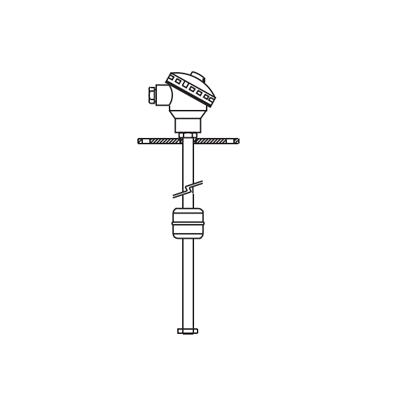
Rod Float Level Switch
1–4 set-points
Discrete level switch with one to four magnetic reed points on a stainless guide rod. Passive dry contacts need no power supply, and the reed elements never touch the liquid. Rod diameter 9–25 mm, pressure to 6.3 MPa, temperature to 150 °C.
View specifications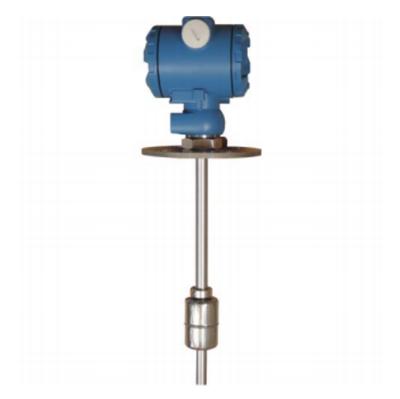
Rod Float Level Switch
Extended body
The HWS20 shares the HWS10's reed-on-rod principle with a longer, heavier-duty body for deeper tanks and wider mounting spans. Same passive dry-contact output, 1–4 set-points, 6.3 MPa and 150 °C ratings.
View specifications Illustrative image
Cable Float Level Switch
SPDT, 15 A
Injection-moulded float on a flexible rubber cable, switching 15 A at 250 V AC through an SPDT contact. Suits long cable runs, multiple points on one drop, submersible pumps and media carrying granular solids. IP68, specific gravity above 0.6.
View specifications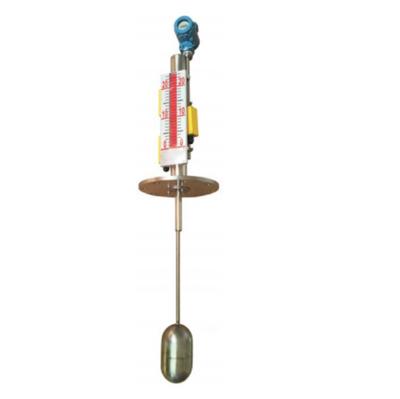
Magnetic Level Gauge
Top-mounted
Direct-reading magnetic flip gauge for top mounting, 200–6000 mm range, 10 MPa and up to 450 °C. Red-and-white flip column needs no power; a 4–20 mA transmitter and magnetic memory switches can be added for remote indication and alarms.
View specifications